
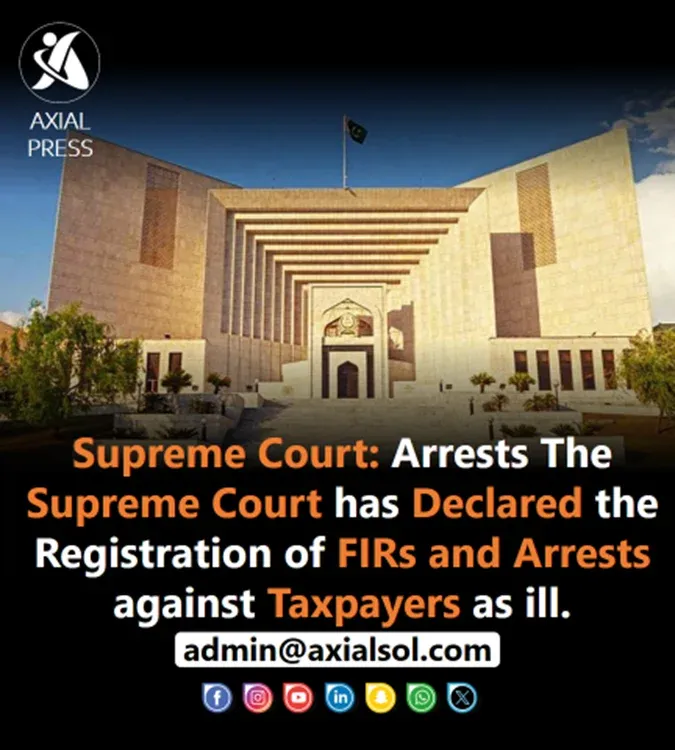
Court Rules Criminal Proceedings Under SROs Unconstitutional
Islamabad (Web Desk): The Islamabad High Court has ruled that starting criminal cases under a Statutory Regulatory Order (SRO) goes against the Constitution and the basic principles of justice. The judges stated that tax authorities cannot use SROs to bypass legal limits or declare citizens guilty before a fair trial.
The court explained that every tax dispute must go through a clear and lawful process. Citizens should be treated fairly and given a chance to explain their side before any criminal step is taken. This ruling reminds government departments that their power must stay within the law.
Early Criminal Action Undermines Fairness
The written judgment noted that starting criminal action too early in a tax inquiry damages the justice system. The court said that such actions create fear and discourage honest taxpayers. Before taking strict steps, officials should confirm the actual tax liability through proper legal procedures.
Moreover, the judges stressed that criminal law should not be used as a tool to pressure or threaten people. Instead, the tax system must build trust between the government and citizens. Fairness and patience, the court added, are the best ways to ensure compliance.
Citizens’ Right to a Fair Trial
The court emphasized that every taxpayer has the right to defend themselves. Declaring someone a criminal before a final decision breaks Article 10-A of the Constitution, which protects the right to a fair trial. Justice, the court said, cannot exist without due process and transparency.
Officials must act responsibly and remember that they serve the people. Administrative ease should never come before citizens’ rights or dignity. The court also reminded departments that the rule of law protects both the state and its citizens.
SROs and the Limits of Authority
The judgment made it clear that SROs are meant for tax policy and regulation, not for criminal prosecution. Using them to file criminal charges, the judges said, is an abuse of executive power. Departments must act within their legal boundaries and respect constitutional limits.
The court ordered the government to ensure that all future tax actions follow the proper legal process. It said that transparency and fairness are key to restoring public confidence in tax institutions.
Strengthening the Rule of Law
In conclusion, the court reminded all institutions that the rule of law forms the base of justice. Any move that skips legal steps or denies people their rights weakens democracy. The verdict sends a strong message that justice must always be done — and seen to be done.
Legal experts believe this decision will improve how tax authorities handle disputes in the future. It could also push the government to review the use of SROs in tax administration and enforcement.